 Chemical artificial intelligence has reached an inflection point where the scarcity of high-quality experimental data, not the sophistication of algorithms, now governs the pace of discovery. Public literature, for all its openness, captures only a fraction of what...
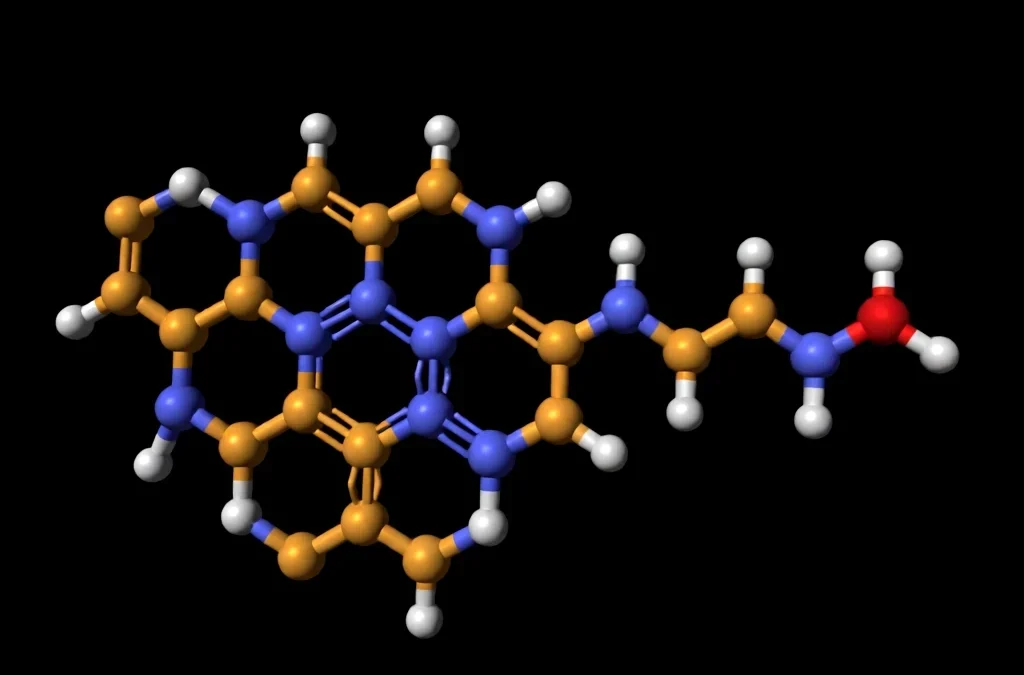 Fluorescence is one of the most sensitive detection phenomena available to modern chemistry, capable of registering single photons emitted by a molecule that has absorbed light and re-released it at a longer wavelength. Yet the efficiency of that emission is governed...
 Quantum simulation has quietly become one of the most consequential ideas in modern computational science, yet it remains widely misunderstood by the public and even by many working engineers. At its core, the concept describes the use of one controllable physical...
 Einstein’s general theory of relativity predicts that a rotating mass drags the fabric of spacetime along with it, a subtle relativistic effect known as frame dragging or the Lense–Thirring effect. Around Earth, this twisting is extraordinarily faint, yet it...
 The phrase “time crystal” has become one of the most abused terms in contemporary science communication, invoked to describe everything from quantum computers to synchronized fireflies. Yet behind the buzzword lies a precise and genuinely revolutionary...
