
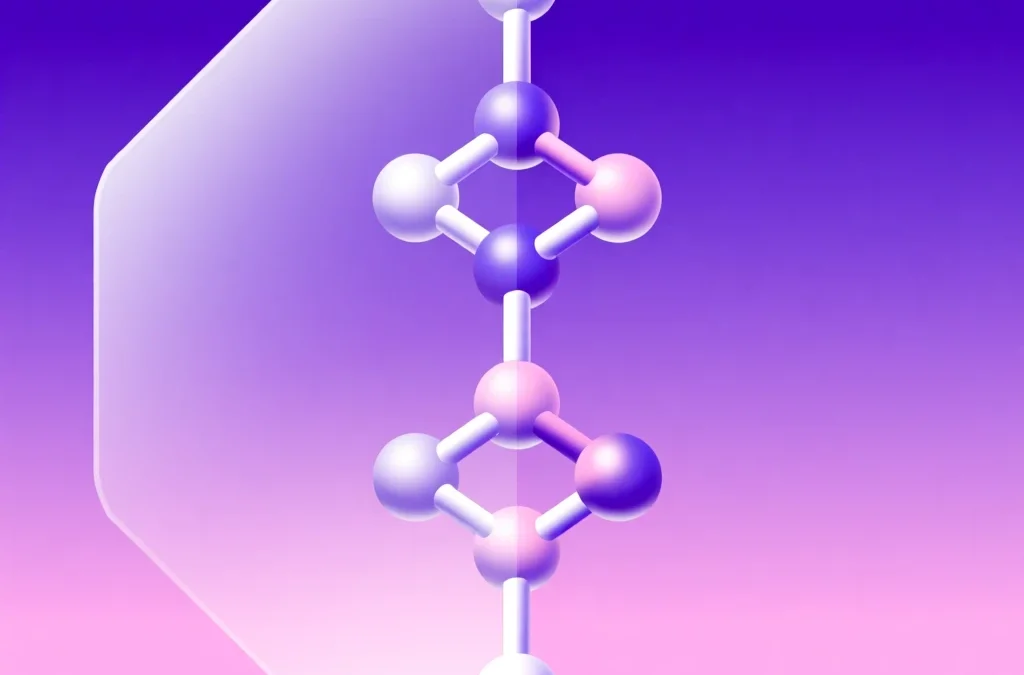
Molecular flatness has quietly become one of the most consequential liabilities in modern medicinal chemistry, and the reason is deceptively simple: shape governs biological recognition. A drug molecule does not merely need the right atoms in the right order; it must present those atoms in a three-dimensional geometry that complements a protein binding pocket with precision. When a candidate is excessively planar, it tends to stack, aggregate, and bind promiscuously, producing the twin failures of poor solubility and off-target toxicity that plague so many development programs.
The aromatic ring, chemistry's most celebrated structural motif, is also its most seductive trap. Benzene-like scaffolds are easy to synthesize, easy to functionalize, and easy to patent, which is precisely why they dominate screening libraries and, by extension, the pharmaceutical pipeline. Yet this convenience has a hidden cost. Flat molecules pack efficiently into crystal lattices and into each other, and that same packing propensity follows them into solution and into the clinic, where it manifests as attrition.
A new synthetic strategy now offers a corrective: the use of a single carbon atom as a structural hinge, converting planar frameworks into saturated, three-dimensional architectures in a minimal number of steps. This article examines why flatness undermines drug performance, how one-carbon transformations remodel molecular geometry, and what the shift toward three-dimensionality means for the future of drug discovery. The chemistry is elegant, but the stakes are profoundly practical.
On This Page
The Structural Logic of Molecular Flatness
Planarity in organic molecules arises from the geometry of ##[sp^2]## hybridized carbon, where three sigma bonds lie in a single plane and the remaining p orbital participates in pi bonding. This arrangement is energetically favorable and synthetically accessible, which explains the overwhelming prevalence of aromatic and unsaturated scaffolds in compound collections. The consequence, however, is a molecular shape that is thin in one dimension and broad in the other two.
Why Aromatic Scaffolds Dominate Screening Libraries
Combinatorial and parallel synthesis methodologies were built around aromatic coupling reactions, particularly palladium-catalyzed cross-couplings that forge carbon-carbon bonds between planar partners. These reactions are robust, well-understood, and tolerant of enormous functional group diversity, making them the default tool for library generation. The result is a chemical space that is heavily biased toward flat, sparsely three-dimensional structures.
Statistical surveys of commercial compound collections reveal that a substantial majority of screening compounds possess a fraction of ##[sp^3]## carbons below ##[0.3]##, meaning fewer than one saturated carbon for every three unsaturated ones. This metric, often called ##[Fsp^3]##, correlates strongly with clinical success. Molecules with higher ##[Fsp^3]## values tend to exhibit better solubility, lower melting points, and reduced promiscuity across unrelated targets.
The bias is self-reinforcing. Medicinal chemists trained on aromatic chemistry naturally design aromatic analogs, and vendors supply what the market demands. Breaking this cycle requires not merely new reactions but a conceptual reorientation toward saturated frameworks as first-class design elements rather than afterthoughts appended to aromatic cores.
The Fsp³ Metric in Practice
The fraction of ##[sp^3]## carbons is calculated as the ratio of saturated carbons to total carbons in a molecule. A fully aromatic compound such as benzene yields ##[Fsp^3 = 0]##, while a fully saturated cyclohexane yields ##[Fsp^3 = 1]##. Most marketed oral drugs cluster between ##[0.3]## and ##[0.6]##, a range that balances metabolic stability against the solubility benefits of saturation.
Consider a hypothetical screening compound with ##[22]## carbons, of which ##[4]## are saturated. Its ##[Fsp^3]## value is ##[4/22 approx 0.18]##, well below the range associated with successful oral drugs. Converting two aromatic rings into saturated bicyclic systems would raise the count to ##[12]## saturated carbons, yielding ##[Fsp^3 approx 0.55]## and dramatically altering the molecule's physicochemical profile.
The Physicochemical Penalties of Planarity
Flat molecules stack. This is not a metaphor but a measurable physical phenomenon driven by pi-pi interactions and van der Waals contacts between extended planar surfaces. In aqueous solution, stacking promotes aggregation, and aggregates produce artifacts in assay readouts, apparent insolubility, and unpredictable pharmacokinetics. Crystal structures of kinase inhibitors frequently reveal stacked dimers rather than the intended one-to-one binding mode.
Planarity also correlates with high melting points, because lattice energies scale with the area of intermolecular contact. A high melting point signals strong crystal packing, which in turn predicts poor aqueous dissolution, the rate-limiting step for oral absorption. Three-dimensional molecules present smaller contact surfaces and disrupt packing, lowering melting points and improving bioavailability without altering molecular weight.
The One-Carbon Transformation Explained
The synthetic innovation at the heart of this discussion exploits a single carbon atom as a geometric pivot, inserting it into an existing planar framework to create a saturated, non-planar ring system. Conceptually, the transformation converts an aromatic or unsaturated ring into a bridged or fused bicyclic structure whose carbons adopt tetrahedral geometry. The result is a molecule that occupies three-dimensional space rather than a plane.
Mechanistic Anatomy of the Insertion
Single-carbon insertions typically proceed through carbene or carbenoid intermediates, highly reactive species bearing a divalent carbon with a vacant p orbital and a lone pair. When generated in the presence of an unsaturated substrate, the carbene can add across a pi bond, forming a cyclopropane ring that serves as a strained, versatile intermediate for further elaboration.
The elegance of the approach lies in its atom economy. A single carbon unit, often delivered as a diazo compound or a haloform-derived carbenoid, effects a transformation that would otherwise require multi-step ring construction. Atom economy, defined as the ratio of atoms incorporated into the product to atoms in the reactants, approaches unity for ideal insertions.
For a reaction in which a ##[C_1]## unit of mass ##[14]## is added to a substrate of mass ##[180]## with no byproducts, the atom economy is ##[194/194 = 100%]##. Real insertions evolve nitrogen or hydrogen halide, so practical values fall between ##[60%]## and ##[85%]##, still far superior to classical multi-step sequences.
From Cyclopropane to Complex Frameworks
Cyclopropanes formed by carbene addition are not endpoints but gateways. Their ring strain, approximately ##[115]## kJ/mol, provides thermodynamic driving force for ring-opening and rearrangement reactions that forge larger saturated rings. Acid-mediated or transition-metal-catalyzed rearrangements convert the strained three-membered ring into cyclobutanes, cyclopentanes, or bridged bicyclic systems.
Each rearrangement step increases the ##[Fsp^3]## value and introduces stereocenters, the chiral centers that give three-dimensional molecules their shape-specific binding properties. A single insertion can therefore generate multiple stereocenters in one operation, a feat that classical asymmetric synthesis would require several sequential steps to accomplish.
Escape from Flatland: The Pharmacology of Shape
Protein binding pockets are three-dimensional cavities, and a ligand must match their contours to achieve high-affinity, selective binding. A flat molecule can enter a pocket but cannot fill its recesses, leaving unoccupied volume that weakens binding and permits alternative binding modes. Three-dimensional ligands exploit pocket topology more completely, gaining affinity and discrimination simultaneously.
Binding Affinity and the Thermodynamics of Shape Complementarity
The free energy of binding, ##[Delta G_{bind}]##, reflects the balance of enthalpic contacts and entropic penalties. Shape complementarity improves the enthalpy term by maximizing favorable van der Waals contacts and hydrogen bonds, while pre-organizing the ligand reduces the entropic cost of adopting a bound conformation. Rigid three-dimensional scaffolds are inherently pre-organized.
A ligand that buries an additional ##[40]## Ų of hydrophobic surface contributes roughly ##[0.5]## kcal/mol of binding energy, translating to a ##[2.3]##-fold improvement in affinity at ##[298]## K. Over several such contacts, the cumulative effect can exceed two orders of magnitude, the difference between a micromolar hit and a nanomolar lead.
Selectivity follows the same logic. Flat molecules present similar faces to structurally related proteins, so they bind many targets with comparable affinity. Three-dimensional shapes present distinctive surfaces that discriminate between homologous pockets, reducing off-target engagement and the toxicity that accompanies it.
Metabolic Stability and the Saturation Advantage
Saturated carbons resist oxidative metabolism more effectively than aromatic ones in specific contexts, though the relationship is nuanced. Cytochrome P450 enzymes readily hydroxylate saturated positions, but the resulting metabolites are often more soluble and less reactive than arene oxides derived from aromatic oxidation. Avoiding aromatic rings therefore reduces the risk of reactive metabolite formation.
The classic example is the replacement of a phenyl ring with a saturated bicyclic system, which frequently eliminates glutathione adduct formation while preserving potency. Drug designers now routinely apply this tactic when aromatic oxidation generates toxicophores, and one-carbon insertion chemistry makes such replacements synthetically accessible.
- 01
- 02
Quantifying Three-Dimensionality in Drug Design
Medicinal chemists require numerical descriptors to guide design decisions, and several metrics now quantify the departure from planarity. The most widely used is ##[Fsp^3]##, but it captures only carbon hybridization and ignores the spatial distribution of atoms. More sophisticated measures, including principal moment of inertia ratios and plane-of-best-fit deviations, describe shape directly.
Principal Moments of Inertia and the PMI Plot
The principal moments of inertia, ##[I_1 leq I_2 leq I_3]##, characterize how mass is distributed about a molecule's rotational axes. Normalizing by ##[I_3]## yields the ratios ##[I_1/I_3]## and ##[I_2/I_3]##, which locate a molecule on a triangular plot whose vertices represent rod, disc, and sphere shapes. Planar molecules cluster along the rod-disc edge.
A molecule with ##[I_1/I_3 = 0.15]## and ##[I_2/I_3 = 0.20]## lies near the rod-disc boundary, indicating pronounced flatness. Shifting these ratios toward ##[0.6]## and ##[0.7]## moves the compound into the sphere-like region associated with superior oral bioavailability and reduced promiscuity.
The PMI approach complements ##[Fsp^3]## because it captures global shape rather than local hybridization. A molecule can possess many saturated carbons yet remain elongated and rod-like, and PMI analysis exposes such cases. Combining both metrics provides a more reliable assessment of three-dimensional character.
Computational Screening for Shape Diversity
Modern virtual screening pipelines now incorporate shape descriptors alongside docking scores, filtering libraries for compounds that occupy under-represented regions of shape space. This strategy, sometimes called scaffold hopping by shape, identifies three-dimensional replacements for flat leads while preserving pharmacophoric features essential for binding.
import numpy as np
from rdkit import Chem
from rdkit.Chem import Descriptors, rdMolDescriptors

def fsp3(smiles):
    mol = Chem.MolFromSmiles(smiles)
    total_c = sum(1 for a in mol.GetAtoms() if a.GetSymbol() == "C")
    sp3_c = sum(1 for a in mol.GetAtoms()
                if a.GetSymbol() == "C" and a.GetHybridization() == Chem.HybridizationType.SP3)
    return sp3_c / total_c if total_c else 0.0

def pmi_ratios(smiles):
    mol = Chem.MolFromSmiles(smiles)
    mol = Chem.AddHs(mol)
    conf = Chem.AllChem.EmbedMolecule(mol, randomSeed=42)
    Chem.AllChem.MMFFOptimizeMolecule(mol)
    coords = mol.GetConformer().GetPositions()
    masses = np.array([a.GetMass() for a in mol.GetAtoms()])
    com = np.average(coords, axis=0, weights=masses)
    centered = coords - com
    inertia = np.zeros((3, 3))
    for m, r in zip(masses, centered):
        inertia += m * (np.dot(r, r) * np.eye(3) - np.outer(r, r))
    eigvals = np.sort(np.linalg.eigvalsh(inertia))
    return eigvals[0] / eigvals[2], eigvals[1] / eigvals[2]

for smi in ["c1ccccc1", "C1CCCCC1", "c1ccc2ccccc2c1"]:
    print(smi, round(fsp3(smi), 3), [round(x, 3) for x in pmi_ratios(smi)])
Running this script on benzene, cyclohexane, and naphthalene illustrates the contrast. Benzene returns ##[Fsp^3 = 0]## with PMI ratios near ##[0.09]## and ##[0.09]##, placing it firmly in the flat region. Cyclohexane returns ##[Fsp^3 = 1]## with ratios near ##[0.63]## and ##[0.63]##, squarely in the sphere-like zone.
Implications for Medicinal Chemistry Practice
The availability of one-carbon insertion chemistry changes the strategic calculus of lead optimization. Previously, converting a flat lead into a three-dimensional analog required de novo synthesis of an entirely new scaffold, a costly and time-consuming endeavor. Now, a single transformation can generate the three-dimensional variant directly from the planar precursor, enabling rapid exploration of shape space around a validated chemotype.
Redesigning Screening Libraries
Compound vendors and academic screening centers are beginning to incorporate three-dimensional scaffolds into their catalogues, recognizing that flat-biased libraries yield flat-biased hits. The design principle is straightforward: for every aromatic scaffold offered, provide a saturated bicyclic analog with comparable functional group handles. This pairing allows medicinal chemists to compare shapes directly during hit-to-lead work.
Library design also benefits from computational enumeration of shape-diverse analogs. Given a planar core, software can propose one-carbon insertion products and rank them by predicted ##[Fsp^3]##, PMI ratios, and synthetic accessibility. Chemists then prioritize the most promising three-dimensional candidates for synthesis, compressing optimization cycles.
Case Studies in Scaffold Transformation
Several kinase inhibitor programs have reported that replacing a phenyl ring with a bicyclo[1.1.1]pentane or cubane system preserves target affinity while improving solubility and metabolic stability. These saturated bioisosteres mimic the spatial span of the aromatic ring without its flatness, and one-carbon chemistry provides practical access to them from simple precursors.
The bioisostere concept extends beyond carbon frameworks. Saturated heterocycles such as piperidines and morpholines offer three-dimensional alternatives to pyridine and related aromatic heterocycles, and their incorporation frequently improves both pharmacokinetics and selectivity. The synthetic challenge, historically, was accessing these rings efficiently; one-carbon methods now address it.
Challenges, Limitations, and the Road Ahead
One-carbon insertion chemistry is powerful but not universal. Carbene intermediates are reactive and can engage in competing pathways, including C-H insertion, dimerization, and rearrangement, which reduce yield and complicate purification. Substrate scope remains limited to activated alkenes and arenes, and electron-poor substrates often react sluggishly or not at all.
Synthetic and Practical Constraints
Scaling carbene chemistry from milligram screening amounts to kilogram manufacturing quantities introduces safety and engineering challenges. Diazo compounds, common carbene precursors, are explosive and toxic, requiring specialized equipment and rigorous handling protocols. Continuous flow reactors mitigate these risks by maintaining small inventories of hazardous intermediates.
Enantioselective control adds another layer of complexity. Chiral catalysts, typically copper or rhodium complexes with elaborate ligands, must deliver high enantiomeric excess across diverse substrates. Catalyst loadings and costs can be prohibitive at scale, and catalyst removal from the final product must meet stringent regulatory limits.
The Future of Three-Dimensional Drug Design
Despite these constraints, the trajectory is unmistakable. Regulatory agencies, journals, and funding bodies increasingly recognize that molecular shape is a first-order determinant of clinical success, and the tools to manipulate shape are maturing rapidly. One-carbon chemistry occupies a strategic position because it delivers maximal geometric change with minimal synthetic effort.
The next decade will likely see three-dimensional scaffolds become standard components of screening libraries rather than exotic additions. As synthetic methods improve and computational shape analysis becomes routine, the flat-molecule bias that has constrained drug discovery for decades will erode, replaced by a design philosophy that treats molecular geometry as a primary variable rather than an afterthought.
RESOURCES
- Resources will be updated soon.
- 01
- 02
- 03
- 04
- 05
- 06
- 07
- 08